

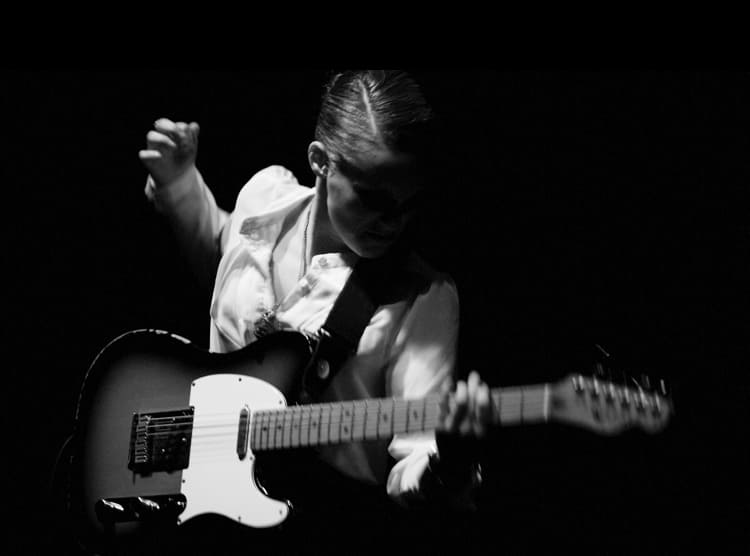
The prestigious collaboration with Iggy Pop has been presented through two video formats, an official one on YouTube and a second one that appeared a few days later on the director’s social page. Here my double review of the two music videos, different but complementary.
Version 1
Anna Calvi’s recording activity over a decade has been particularly intense, consisting of three albums (four if we include the rough version of Hunter with duets), singles, covers, EPs, soundtracks (notably those for the last two seasons of the TV series Peaky Blinders), guest appearances and various collaborations. Later, her productivity declined somewhat, partly due to the birth of her son.
Last October she released the ballad I See A Darkness, a cover by Bonnie ‘Prince’ Billy featuring Perfume Genius. It serves as a prelude to the new EP Is That All There Is?, due out on March 20th 2026. Standing out in the tracklist is God’s Lonely Man, a brand-new song performed as a duet with none other than Iggy Pop. After Brian Eno, David Byrne and Marianne Faithfull, this is undoubtedly another prestigious collaboration for the English singer. Iggy is one of the last great sacred monsters of a nearly extinct musical scene, though he sometimes yields to commercial compromises (see his collaboration with Måneskin), he remains untouchable, without losing his sacred aura as a super-punk titan.
Anna writes and tailors the song specifically for him. She does not stray too far from her compositional comfort zone, yet at the same time she proposes a sound very close to the historic production of the old Iguana. It feels like listening to an outtake from The Idiot, almost a hybrid between Mass Production and The Passenger (all masterpieces published in collaboration with David Bowie, in 1977), yet injected with the powerful electric guitar lashes typical of the English artist. And if we want to refer to the American’s more recent production, it is impossible not to mention his 2019 track Loves Missing.
The vocal recordings for God’s Lonely Man were made separately, at different times (and on different sides of two oceans). Domino Records has chosen to promote the track with an official music video in which the two artists interact together, filmed in Miami under the direction of Luigi Calabrese, edited by Rianne White and produced by Dominic Easter.
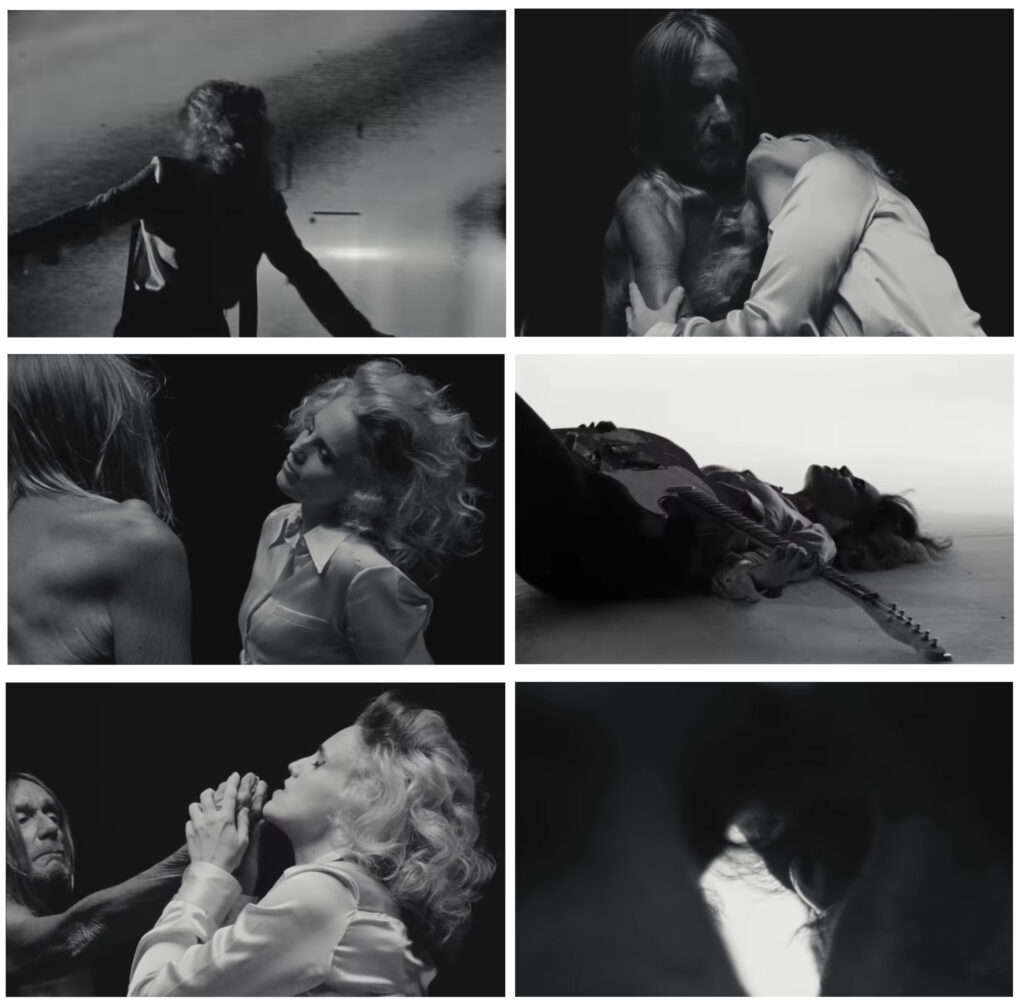
The footage opens with a subjective shot of Iggy: the usual long, straight hair, the usual proud and provocative gaze, bristly beard, half-closed eyes staring straight into the camera, even throwing a mock left hook at it, then a perfectly measured hint of a smile at the corner of his mouth. Still bare-chested. The opening credits roll in giant red font, typical of Anna’s discography; we glimpse her only briefly, with her back turned, standing before a giant industrial screen displaying a close-up of Pop. Shot strictly in black and white, the video in under three minutes amplifies the song’s semantic potential, inviting multiple interpretations.
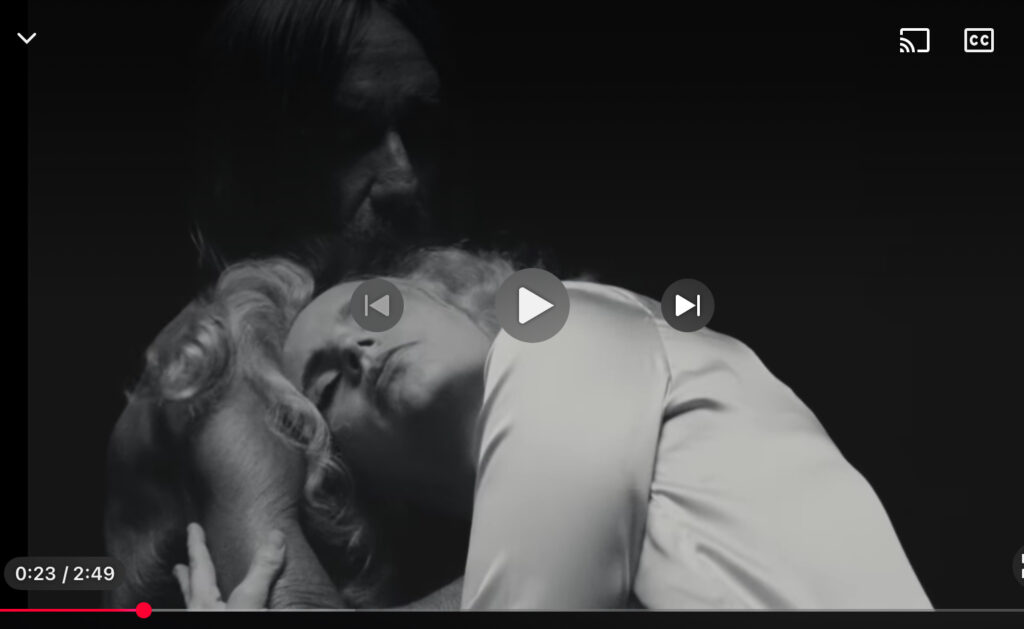
The unlikely pair avoid miming the lyrics and are soon shown seated facing each other, with Calvi practically straddling the founder of The Stooges, her head nestled against him, clinging to his now flaccid biceps. She rubs against him in slow motion, emphasizing an almost animalistic exchange of caresses. The background is pitch black. The years have passed, and the rocker’s once muscular, toned physique has yielded to inexorable decline, yet this is not concealed; rather, it is proudly displayed and brazenly offered to the viewer’s gaze. Fifty years after slicing himself onstage with razor blades, is this a new daring challenge? A renewed way of provoking?
The wrinkled skin on which the lens lingers, the deep grooves crossing his arms and hands—heightened by the chiaroscuro of the frames—make James Osterberg appear like a sacred wooden statue of some saint, an aged Christ with protruding, emaciated collarbones, reclining on a throne inside a votive chapel. If before he defiantly challenged observers, now his gaze is glassy and absent, seemingly expressionless. With a passive attitude, he barely turns his attention to the adoring acolyte, wrapped in a bold silk shirt and platinum-blonde hair. Anna holds his hand as one might with an elderly patient, then interlaces her fingers with his, brings them close to her face – you almost expect her to kiss them – yet instead she rubs his knuckles against her chin, in an exaggeratedly fetishistic yet feline gesture.
During Calvi’s Fender Telecaster solo – shown in accelerated, spasmodic shots – images alternate of the two of them panting on the chair, exhausted from their just-consumed epidermal embrace. In swirling, frenetic sequences she writhes on the floor, plays and almost assaults the guitar, moves before the screen bearing the digital effigy of her lover. Is it merely imagined fantasy? Or is she truly duetting with one of rock’s godfathers? Perhaps she has just completed a vampiric rite to suck out his last vital sap, all conveyed through this hymn to solitude, a raw realism of the human soul. She then raises her arms, gaze upward, triumphant and fulfilled. An act of successful witchcraft? As the crooner’s foregrounded voice gallops solidly over the thunderous drums, the indie artist phrases high notes and backing vocals that blend with the electric reverb of her Fender. The climax of both song and video is softened only by an incredibly intense moment of intimacy: two eyes extremely close, facing each other, their eyelashes brushing together. But it is only an instant amid their wild, spasmodic acts. Calvi toys with a lock of Pop’s hair between her fingertips, returns to embrace him while seated, rubbing her hair against him, leaning onto his lap.
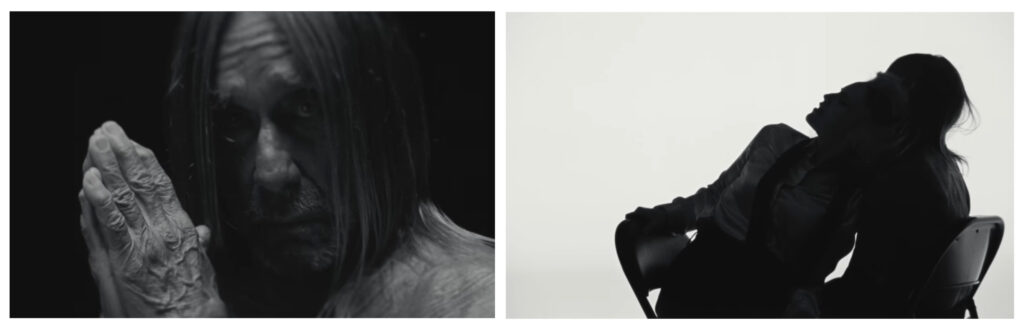
In the finale, Iggy looks back into the camera with a Luciferian gaze, hands clasped almost in prayer. Perhaps he is not at all the victim of the witch from Twickenham; perhaps he is the one who has vampirized her energy, talent, and exuberance. He has reverberated his own ego in a collaboration that may not leave a lasting mark in music history, but God’s Lonely Man certainly stands among the finest rock synergies of early 2026. The video closes on the dark silhouettes of the two singers, fused and interpenetrating, evoking certain canvases by Caravaggio and standing in backlight against a blinding white background.
Version 2
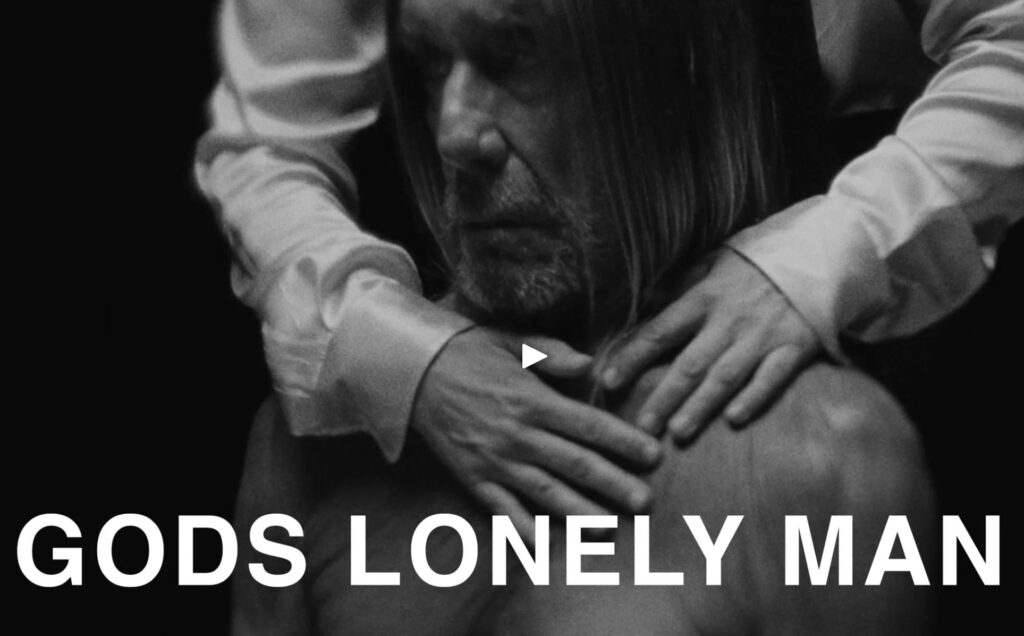
A few days after the release of God’s Lonely Man, director Luigi Calabrese made an alternative version of the official video available on his social media profile. It is an edit that partly uses the same footage but with completely different editing and, above all, numerous entirely new shots, angles, and close-ups.
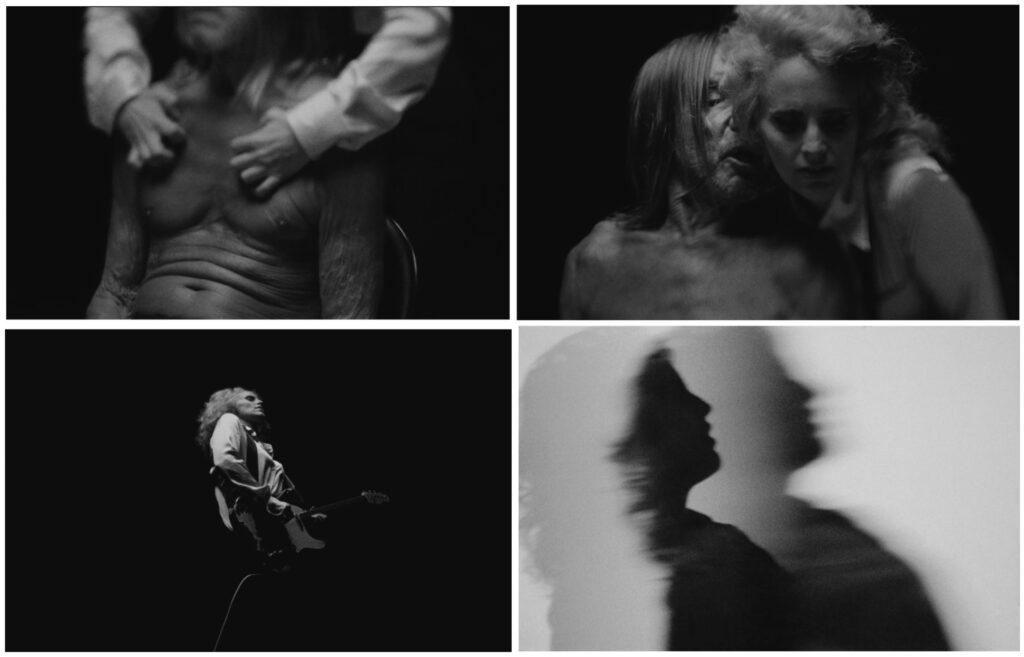
As in the version shared by the record label, the film is in black and white, but without the large red opening titles. We immediately see Iggy seated; Anna approaches him from behind and, remaining standing, first caresses his chest and then scratches it violently. Shots follow of the two rockers seated facing each other, sometimes from a different perspective (likely multiple cameras were used), offering more close-ups with intense gazes and expressions of complicity. In general, the images are ‘dirtier’, with a higher number of out-of-focus moments, and the background constantly alternates between black and white.
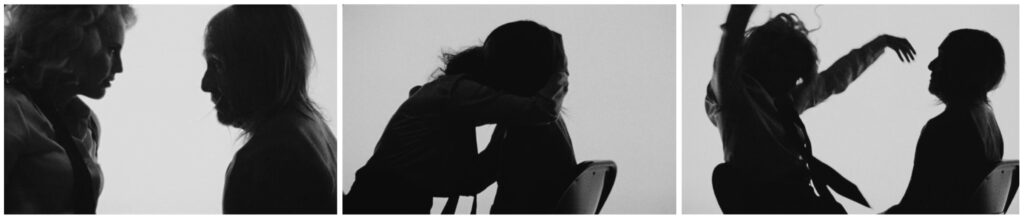
In a couple of frames the pair whisper something into each other’s ears, yet what stands out most is the profound exchange of caresses the protagonists grant one another. For this reason, the camera insistently frames their hands: touching faces, gripping necks, raised upward in ecstasy, searching for bodies and hair, or lingering on the partner’s arms – often clasped together by the godfather of punk. These powerful images, taken individually, seem to recall a purely painterly matrix.
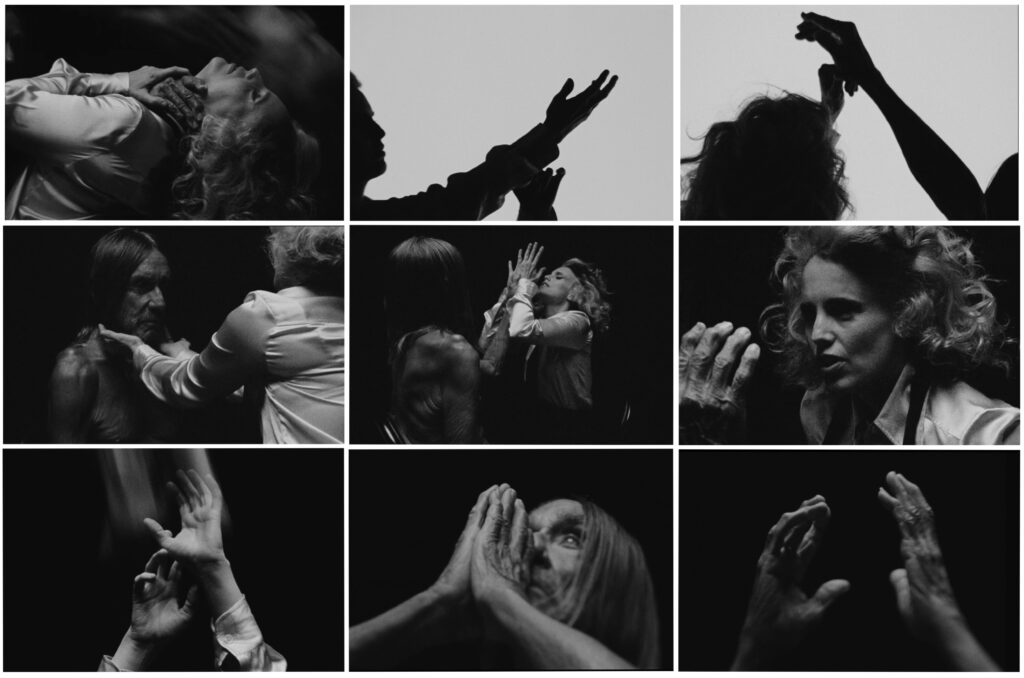
This version lingers longer on Anna Calvi’s figure. We see her seeking and embracing Iggy, then being pushed back against the backrest of his chair, shaken by tremors and ‘performing’ almost the entire solo with a guitar that was previously only glimpsed. Now it can be seen more clearly: a particularly worn Fender Telecaster, a green ’60s Relic model (some color images were shared on her Instagram profile), which toward the end of the short film the singer destroys by smashing it on the ground, even breaking the neck. In the final shots, what remains of the instrument’s body lies on the floor, wrapped in flames. It may allude to some strange sabbatical rite, but it also naturally recalls the finest heavy rock tradition, reaching back to 1967 and the fiery ‘sacrifice’ performed by Jimi Hendrix at the end of Wild Thing during the Monterey Pop Festival. Finally, the closing image belongs entirely to Anna, eyes half-closed in ecstasy, hair in the wind, perhaps already thinking about another musical project.
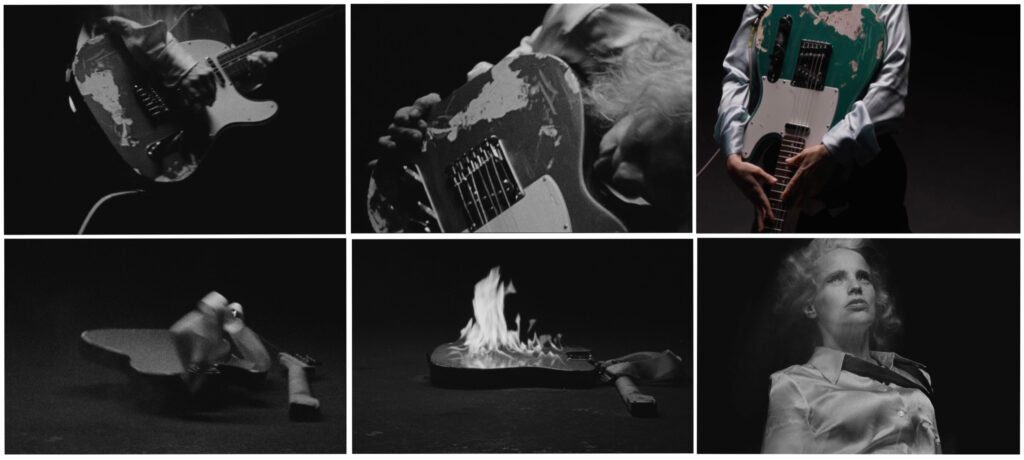
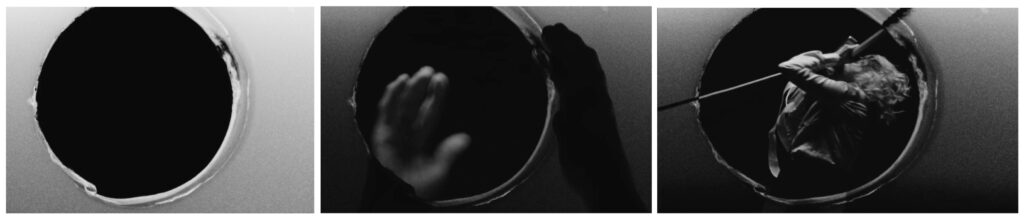
Overall, this edit of the video seems to dispense with the minimal sense of narrative present in the first version; nevertheless, at times it proves more intense thanks to the greater physical expressiveness of its protagonists. Their relationship is particularly complicit on a physical level, reciprocal in the gazes and repeated caresses they grant each other. For a few fleeting instants, the scenes are framed through an irregular circular cavity, perhaps created through a wall, though it seems more likely the result of visual editing.
We do not know whether this version will be officially released to promote the single differently, as it is currently available only on the director’s personal channels, but it can nevertheless be viewed on the Vimeo platform.
© Matteo Tonolli
Here my interview with RIANNE WHITE , who cut and edited the music video