

WITCHES’ RAVE
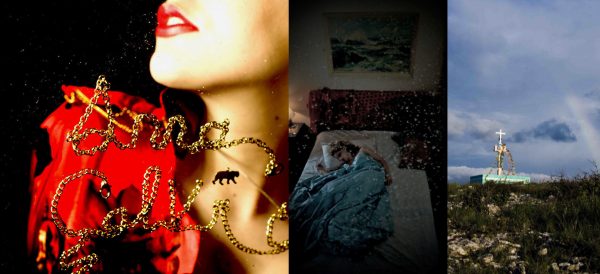
“I’ve been working with Emma Nathan for years, so we’re really on the same wave length in terms of images. Everything I do needs to be in line with my vision, expressing the sentiment of the music.” — Anna Calvi (Dazed, October 2013)
She was responsible for the very first look and the public image of Anna’s debut album, closely collaborating with the singer to emphasize the greatness of a breathtaking record, expressing it through all its artworks: a whole range of powerful photos for the booklet, the cover images for the long playing records and a handful of singles beautifully printed on vinyl. EMMA NATHAN is a very low-profile artist, and she accepted to be interviewed with a little hesitation, but her work reveals a strong attitude and very clear ideas. She also answered some of my questions about her filmmaking, in particular the work she produced to support and promote One Breath. The later 10th years Anniversary Edition of Anna’s first album is a good chance to remember and discover something new about Emma’s work and her artistic relationship with Miss Calvi.
Emma, what is your background?
I have always had an obsessive love of the movies since childhood and so I followed that love into university to study film. The combination of images and music have always affected me in a very visceral way.
When did you realise that art was your path?
As a child we watched a lot of movies, there weren’t really any restrictions on my viewing and my father was really into cinema. The first films I remember becoming really obsessed with were The Rocky Horror Picture Show and My Own Private Idaho. The rich colours of both and experimental nature of the latter, the rich, overt and gleeful performance and queerness. I had and still have a big place in my heart for musicals.
You started your career as a freelance photographer, is that right?
I actually started my career as an edit assistant, working in a dubbing room. Then I moved into editing trailers and promotional material for movies. But during this time I was also working and playing with Anna, photographing and filming her, playing with concepts. I suppose looking back we were forming our collaborative relationship.
When did you first see and hear Anna Calvi sing?
The first time I saw Anna… she was playing the guitar. She was sitting under a tree, in a park in Southampton. I suppose we were about eighteen years old. At that point she hadn’t gained confidence to sing for people yet. I think it wasn’t until we moved to London (her back home, me away from home) that I heard her singing for the first time. She can be very shy.
Your collaboration with her started before the eponymous album, as you took the photos for the very first single, Jezebel. How did it all start?
Professionally, outside of our day-to-day I started taking pictures of and filming Anna in the band she was in just before she went solo. And then… I suppose we already had that bond to create together when ‘Anna Calvi’, the solo artist, was born.
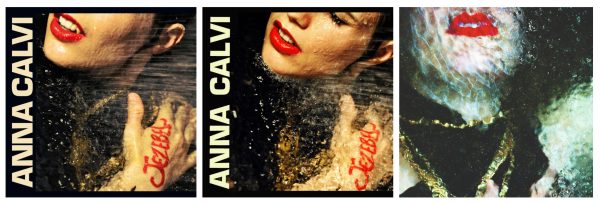
Lipstick and water were the two main ingredients for the two slightly different covers of Jezebel. Could you please tell me something a bit about that session?
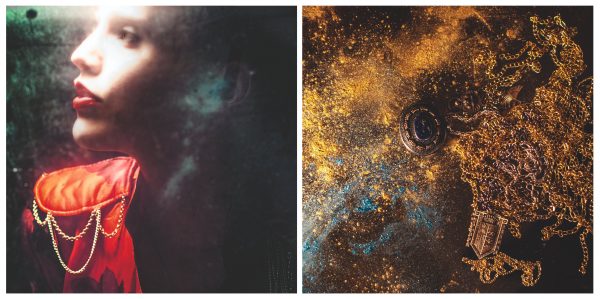
We wanted something dramatic. I thought of a witch linching. Historically women that didn’t fall into line for one reason or another were called witches and given a ‘trial by water’, a lose situation where if they drowned they were innocent and if they lived they were killed. The branding of Jezebel onto Anna and the struggle and movement of the water along with the chains are the almost vampiric look.
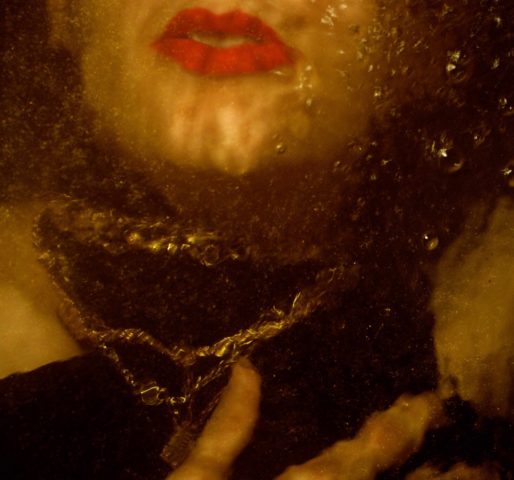
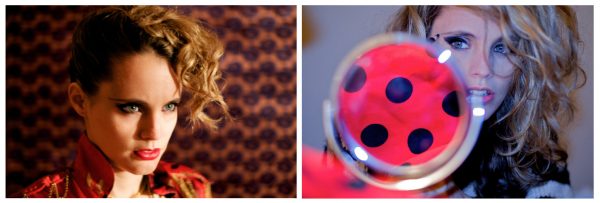
The artwork, the photos and the colours are very recognizable: the red of the lipstick and of the clothes, the dark backgrounds, the eyes and the heavy make-up, the close-ups… was this visual language a deliberate choice?
I think Anna chose a strong look and my love of colour, saturation and drama gelled well with that to form what emerged.
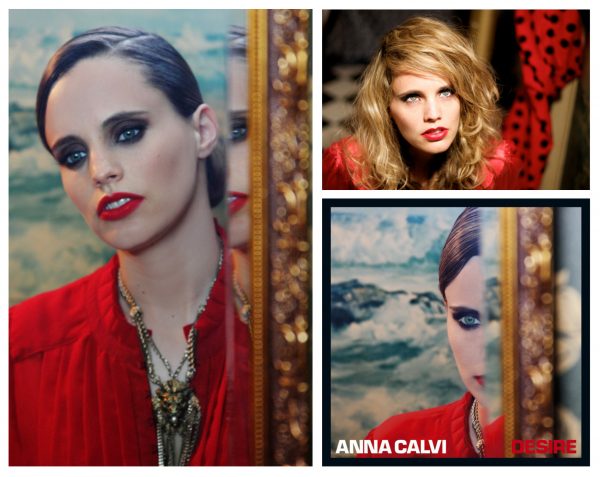
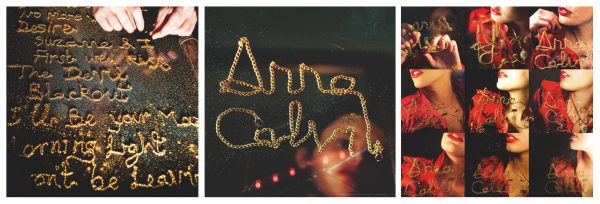
Talking about the cover of the album Anna Calvi, the idea was to physically build the title with a golden chain… did you photograph it through glass?
Yes, the chain writing was a fun but laborious process of taking a long piece gold chain (I had many) and using cursive writing, carefully laying the chains out across the glass, Anna under the glass, often contorting to my commands. She is awfully patient when it comes to realising art.
Was your main goal to become a filmmaker from the beginning?
Initially in life, I wanted to become an editor, but I had a need to create images too, a feeling in seeing beauty that I needed to convey or capture.
Around October 2010 Anna’s first album had not yet been released, but you had already filming her for a couple of songs on stage at the Luminaire in London. Was it commissioned by Domino Records?
Haha, a decade later… I have no clue! I had filmed many gigs with Anna previous to this and so I think it just seemed to progress and make sense that I continue.
How long did you follow Anna during her first tour? Your two shorts films, Somewhere Along the Line, beautifully document the gigs around Europe. What was your approach to that project?
I was with Anna for that whole tour, through Europe. It was an amazing time, seeing her play to such huge crowds, seeing the development of all her work. I felt like it needed documenting. I was there and I wanted to share the experience in some small way.
For One Breath most of the photographs were taken by Roger Deckker, shooting the singer on a trip to Mexico. But you were very involved in the filmmaking and actually directed three music videos and a trailer for Anna’s second album. How did you end up working behind the camera again? It must have been quite a responsibility.
It was a last minute decision to accompany Anna to Mexico. The photography had already been organised but it seemed like such a shame not to capture Mexico, the beauty and the feel, on film. It had to be done and it just ended up feeling so right.
Eliza is a very particular music video, full of references and details. But I’m pretty sure I didn’t catch all of them. Could you tell me about some of them? The setting is fascinating and feels like a gothic fairy tale, especially at the beginning. Was that your intention?
I had planned out Eliza as a one shot video, isolated and hallucinatory with interspersed sudden montages of memories penetrating through the tranquil flow. A person, haunted by love and trauma.
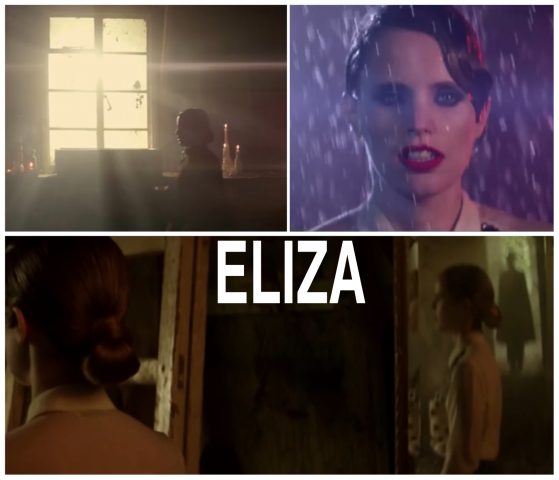
Could you tell me the meaning of the running in the rain in the final scene?
Anna running in the rain at the climax of the film was meant to symbolize the achievement of a kind of freedom. A release from one’s demons and anxieties, it is cleansing, revitalizing and renewing.
Suddenly is a very different music video, more stylish and referring to classic movies from the ’40s. Once you affirmed that your references were Billy Wilder and Douglas Sirk. Where was it filmed?
We had rented out a large, unused house in south London for the shoot.
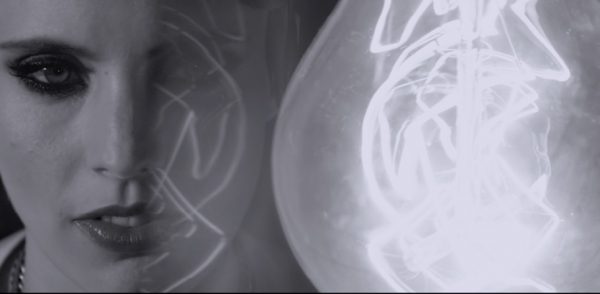
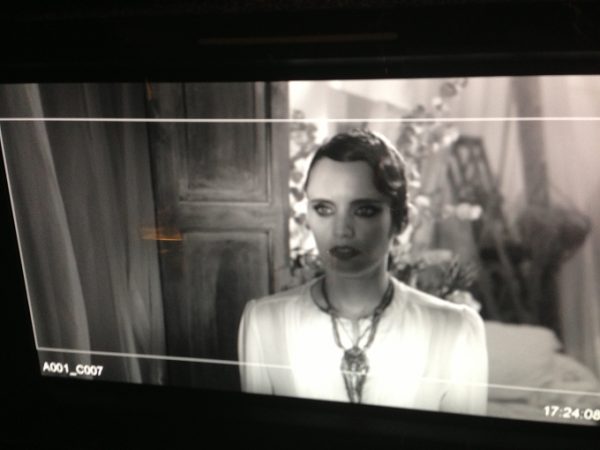
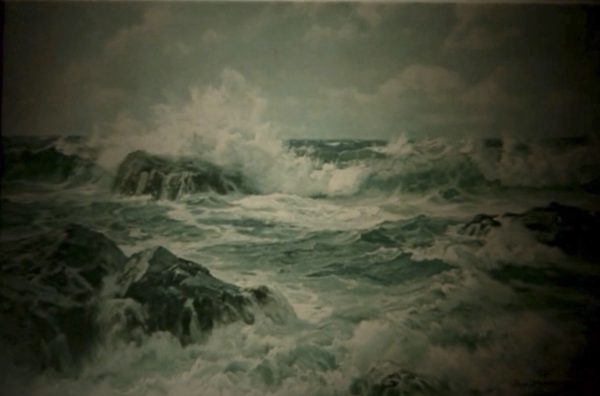
In the video you repeatedly frame a painting, loved by Anna and almost omnipresent in her visual discography: in the booklet of the first album, the Attic Sessions, the cover of the single Desire, the music video Rider To the Sea… what can you tell me about it?
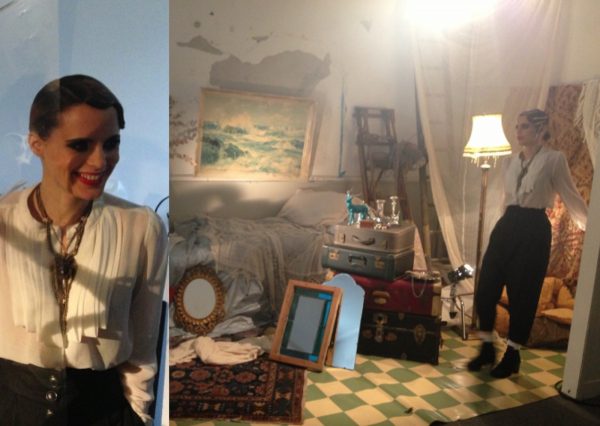
The painting was something from Anna’s grandparents in Rome. There was something about it we both loved, the history, the simplicity and aged look, from another era.
Was Mexico definitely your main inspiration for the music video Sing to Me? Your images perfectly emphasise the atmosphere of that beautiful ballad, adding something more. Did you have any guidelines, or were you completely free? What was Anna’s first reaction when you showed her the footage?
I showed Anna a number of images and movies that the song conjured up for me, and from that we imagined the story, the album already had the feel of a Sergio Leone western, so Mexico was already written in the stars. Images of Soy Cuba* came to me at that point, a beautifully visual film.
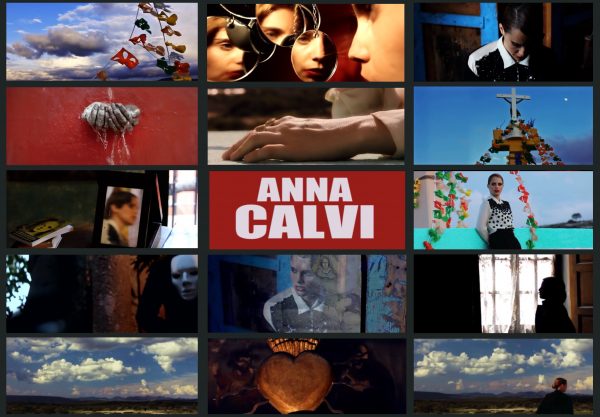
* At the beginning of the ’90s Martin Scorsese and Francis Ford Coppola discovered and revaluated this unknown movie directed in 1964 by the Soviet Mikhail Kalatozov. It is a drama divided in four episodes that emphasizes the Cuban revolutionary spirit at the end of the ’50s through acrobatic tracking shots and innovative techniques and with a beautiful black and white photography by Sergej Uruševskij.
Is there a specific meaning behind some of the images? For example the falling water, the mirrors, the books, or the white mask on Anna’s back…
I feel like the main thoughts behind these images were to express: release, duplicity and the idea of a hidden self, ultimately the feeling of wanting to find oneself, one’s true self, that search and the loneliness it entails.
There are many shots of hands in the video. Was that intentional or perhaps unconscious?
I find hands express a lot. I suppose I often used them to symbolically carry an action to express an emotion. Such as anger, need or intimacy.
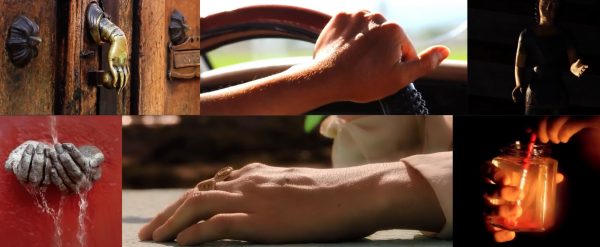
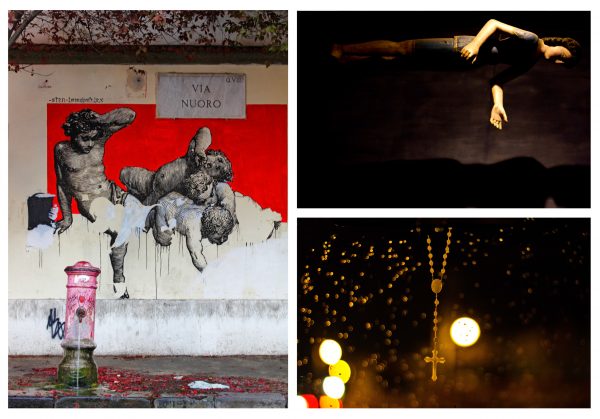
While browsing your website , I was particularly struck by the photographs in the STREETS+TRAVELS section. The viewer can glimpse your point of view: a graffiti in an American city, a fountain by a roadside in Italy, an unusual architectural detail, the reflection in a taxi mirror in Mexico, or the night lights of a town somewhere in the world… What do you usually look for when you take these photographs?
I look for connection I suppose, a hidden beauty that touches me, or something I don’t want to lose.
Has your work become much more difficult during the COVID pandemic?
Oh yes, it feels like a lost year. I have felt quite uninspired and even more introverted.
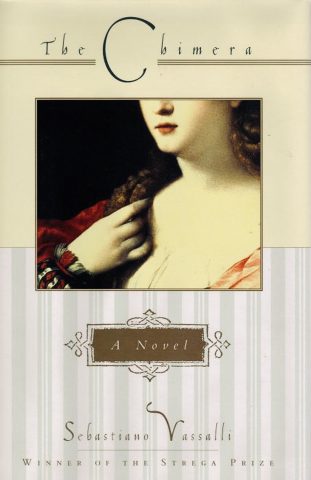
One year ago I interviewed Anna and we talked about some of our favourite books, films and records, as well as sources of inspiration… what are yours? Thinking about what you told me earlier about witches, I can certainly recommend you The Chimera, a wonderful short historical novel by Sebastiano Vassalli…
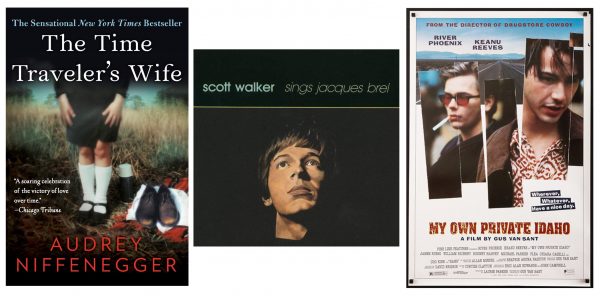
Favourite books, hmm…well, The Time Traveler’s Wife is simply beautiful, it was introduced to me by a close friend. About albums, I adore Scott Walker Sings Jacques Brel, it speaks to my love of drama in music. And films, my god, too many… My Own Private Idaho, as I mentioned before, is just perfect and made me love Gus Van Sant. The weaving of elements make it so eclectic and rich. Then there’s a million more.
You provided some new beautiful photographs for the forthcoming release of the 10th Anniversary Edition of the album Anna Calvi. Were they already in your archive, and what do you still have hidden there?
Yes, I spent a week or so sifting through harddrives. I don’t like having physical belongings. I feel weighed down, but images I can’t seem to let go of, so I have a lot of hard drives. A lot of history to look through. I suppose I have an evolution there, of a life, of a relationship.
Do you think you might work with Anna again in the future?
Yes. It is always possible.
At the moment what are you working on?
I have been working on scripts, which is a very different speed for me.
Interview conceived and realised by Matteo Tonolli, exclusively for Anna Calvi Unofficial Fansite, © 2021.
Photos: © Emma Nathan – emmanathan.com
In the section Gallery (She’s in fashion) more details about the collaboration between Anna and Emma and in Discography/Videography everything produced by them.